
To encourage students to step beyond the classroom and gain a deeper understanding of design aesthetics and the application of complementary therapies in real-world practice, Director Jian-Hua Huang of the Department of Long-Term Care at Asia University arranged an off-campus field visit on December 9, 2025, for students enrolled in the elective “Introduction to Care Services.” The group visited the well-known PlayMe Toy Factory (“Home of Dolls”). Moving beyond a traditional guided tour, the visit featured three hands-on, small-group experiences—“Sharing Childhood Memories,” “Toy-Guided Practice,” and “Creative Woodcraft DIY”—guiding students to learn through interaction how wooden toys can serve as communication tools. Through these activities, students gained an in-depth appreciation of the essence of reminiscence therapy and activity facilitation, forging a meaningful connection between caregiving theory and practical application.
Discovering the Power of Care Through Play: From Childhood Narratives to Reborn Building Blocks—Exploring the Endless Possibilities of Healing
Sharing Childhood Memories
Students formed groups of three to four, sitting together to share childhood stories and toy-related memories. This segment simulated reminiscence therapy groups commonly used in long-term care practice, allowing students to practice listening and narrative engagement. They experienced how thoughtful prompts can help open older adults’ hearts and build trust.
Interactive Practice and Facilitation in the Toy Room
In an exhibition space filled with a wide variety of wooden toys, students did more than simply “play”—they simulated real scenarios of “playing together with older adults.” They learned to select toys appropriate for older adults with different functional abilities and practiced verbal facilitation techniques, transforming simple games into therapeutic processes that promote physical activity and cognitive stimulation.
DIY with Scrap Wood Blocks
The factory provided scrap wood pieces from the production process along with white glue, giving students freedom to create. By skillfully assembling what once seemed like insignificant leftovers into one-of-a-kind works, students not only symbolized giving materials a new life, but also drew inspiration to recognize each older adult’s unique value and potential within caregiving.
Inspiring Learning Through Fun: Seeing Professional Gentleness in the Scent of Wood
Renowned for its high-quality woodworking craftsmanship, PlayMe Toy Factory enabled students to experience firsthand the warmth and calming strength of natural materials. As they bonded irregular scraps of wood together with glue, students came to understand that caregiving work is much the same: it requires patience and attentiveness to piece together scattered fragments of a life into a coherent whole. This was not only a display of creativity, but also a redefinition of value—scrap wood, like marginalized older adults who are easily overlooked, can still reveal distinct beauty and worth when given appropriate support and a meaningful place. This course design, integrating sensory experience, life education, and hands-on practice, gave students a clearer and more hopeful vision of how they may apply these ideas in future professional settings.
Insights from the Field: Student Voices and Reflections
During this off-campus visit—filled with laughter as well as reflection—students demonstrated strong engagement and professional insight. Many students agreed that the most memorable part was the “toy room experience.” Through hands-on practice, they realized that toys are not merely for entertainment; they can be powerful tools for connecting with older adults. Students observed that what matters even more than the toys themselves is “how to energize the atmosphere.” When facilitators can “use one object in multiple ways,” they can spark older adults’ interest, extend attention spans, and further train muscle function and thinking skills. Viewing toys as rehabilitation and reablement tools opened new possibilities for how students envision the future of long-term care.
Student Yong-Xin Ji shared her learning about perspective-taking: “While trying out the toys, I kept thinking, ‘If I were an older adult, how would I play? Where would the fun be?’ This visit helped me discover my creativity and understand that toy development must balance aesthetics and enjoyment.” She was also amazed by the childhood memory-sharing activities with older adults—hearing traditional games still remembered today and learning how much older adults value the everyday tools of past eras broadened her horizons. In the DIY session, Ji crafted a “Japanese bathhouse with a mini Mount Fuji” using scrap wood. She joked, “It was cold, and I wanted to soak in a hot bath—so the idea came to me.” Although time was limited, she found the experience deeply satisfying and hoped for more visits that inspire both creativity and professional thinking.
Student Yi-Ru Wu reflected on the warmth of intergenerational interaction: “Whether it was choosing toys to introduce to older adults or listening to them talk about childhood, I could see the happiness in their eyes. Those stories and values, even if different from today’s, are precious life experiences.” She especially noted how older adults’ focused expressions and individual personalities shone during the DIY activity, which she found admirable. Wu concluded emotionally: “This wasn’t just a learning assignment—it was a process of truly understanding and accompanying older adults. Through sincere conversations, I witnessed a profound connection across generations. That feeling has strengthened my determination to keep working in long-term care.”
Conclusion
This visit was not only an off-campus lesson, but also a profound experience in life education. Through close engagement with industry, students moved beyond the traditional one-way mindset of being “caregivers” and instead began to see themselves as “designers and planners” who can use environments, materials, and creativity to enrich older adults’ lives. The Department of Long-Term Care at Asia University believes that future long-term care professionals must possess not only technical skills, but also the soft skills to identify needs and create joy.
The department will continue to promote experiential, “learning-by-doing” courses like this one, actively connecting with high-quality local industry resources and fulfilling the University Social Responsibility (USR) mission. Through diverse practical engagements, the department hopes to inspire students’ cross-disciplinary imagination in complementary therapies and activity design, so that these future long-term care professionals can transform the craftsman spirit felt in the factory into lasting professional strength. In meeting the challenges of a super-aged society, they will be able to serve older adults with greater flexibility, empathy, and creativity—helping them build later lives filled with dignity, warmth, and laughter, and truly embodying the core values of whole-person care.
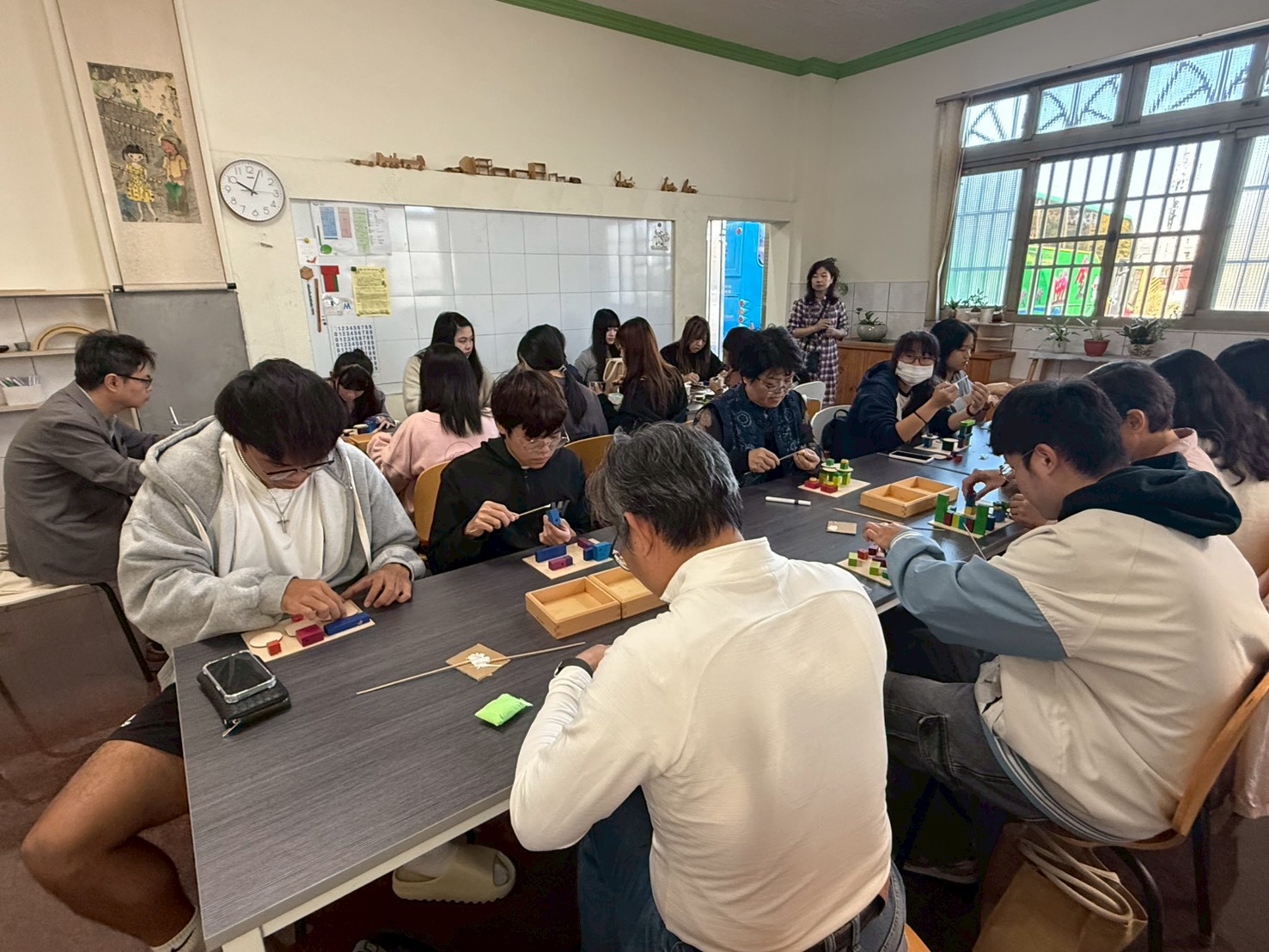 |
| The students were immersed in the fun of the scrap-wood block DIY activity. |
 |
| The students’DIY projects. |
 |
|
The guide introduced the toys to the students. |
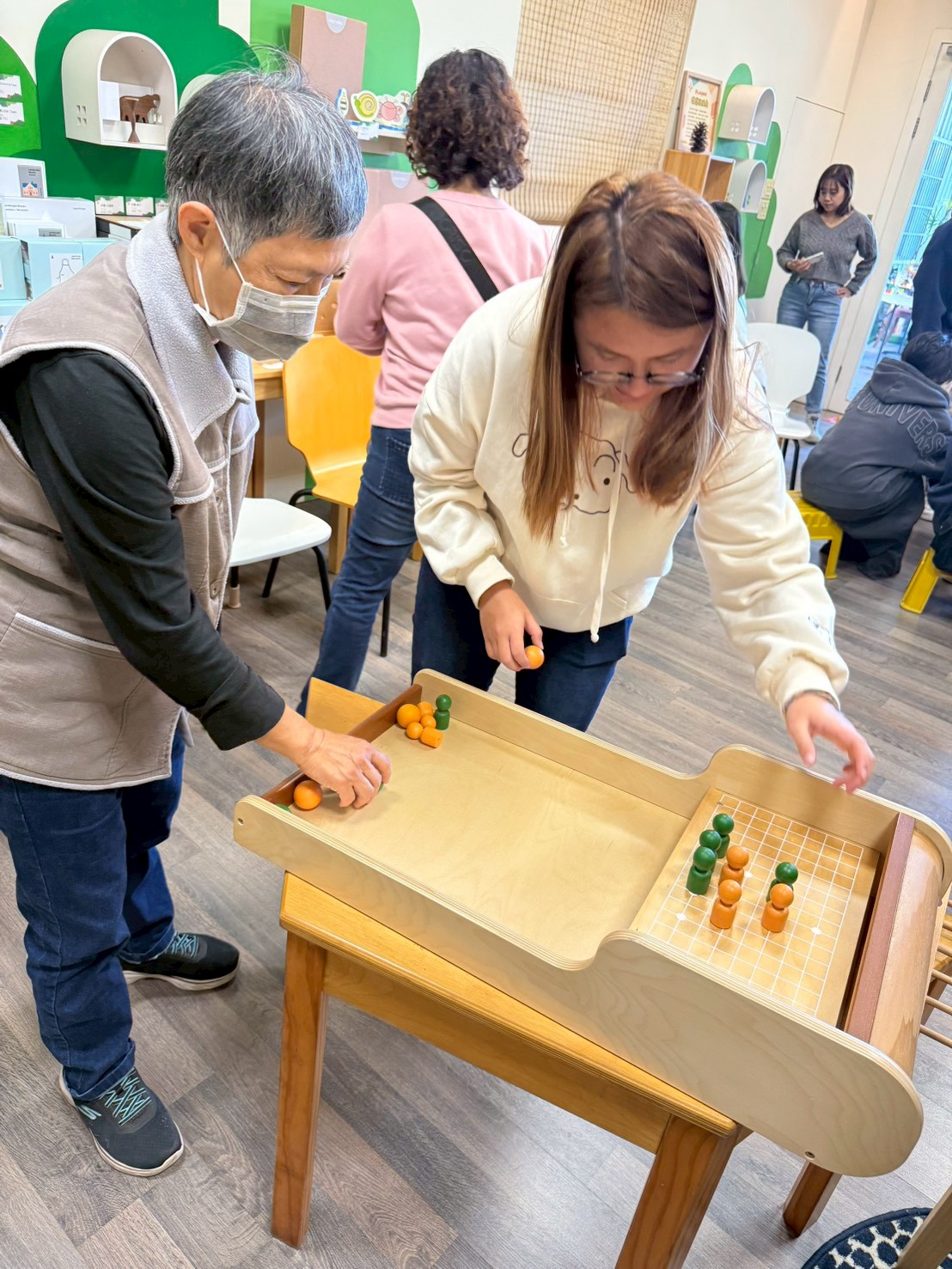 |
| The students guided older adults on how to play with the toys. |
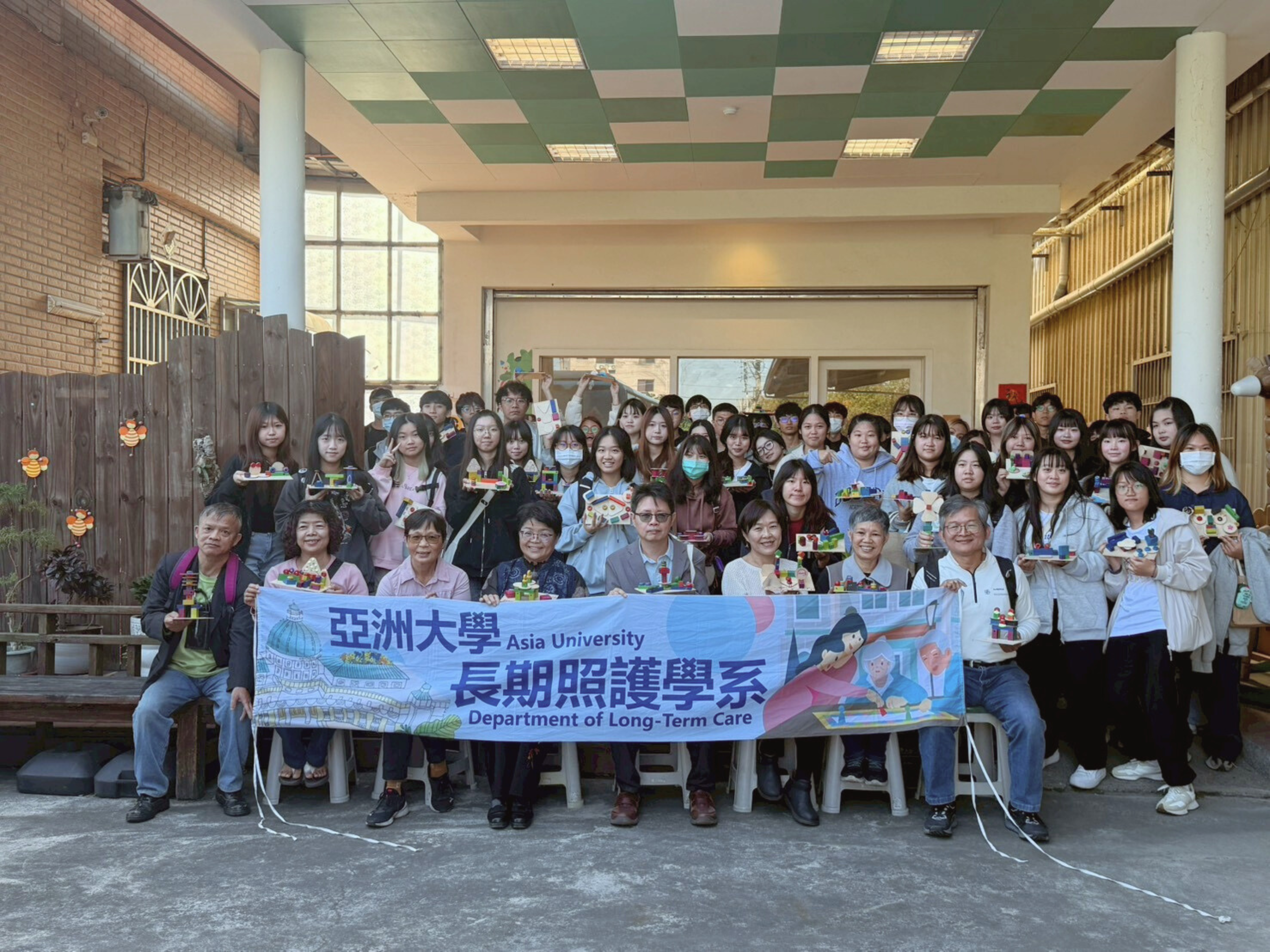 |
| Group photo after the visit. |
