
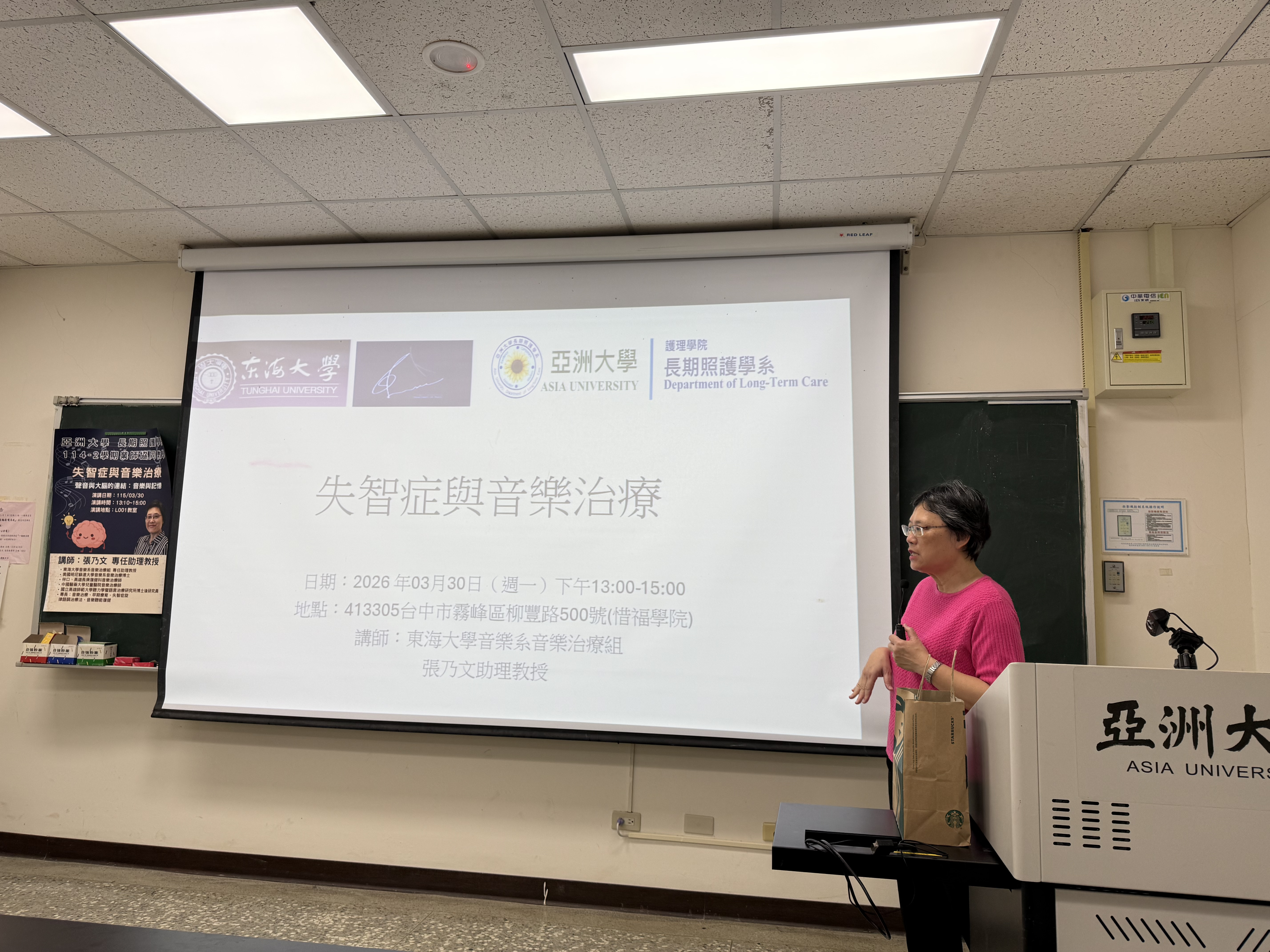
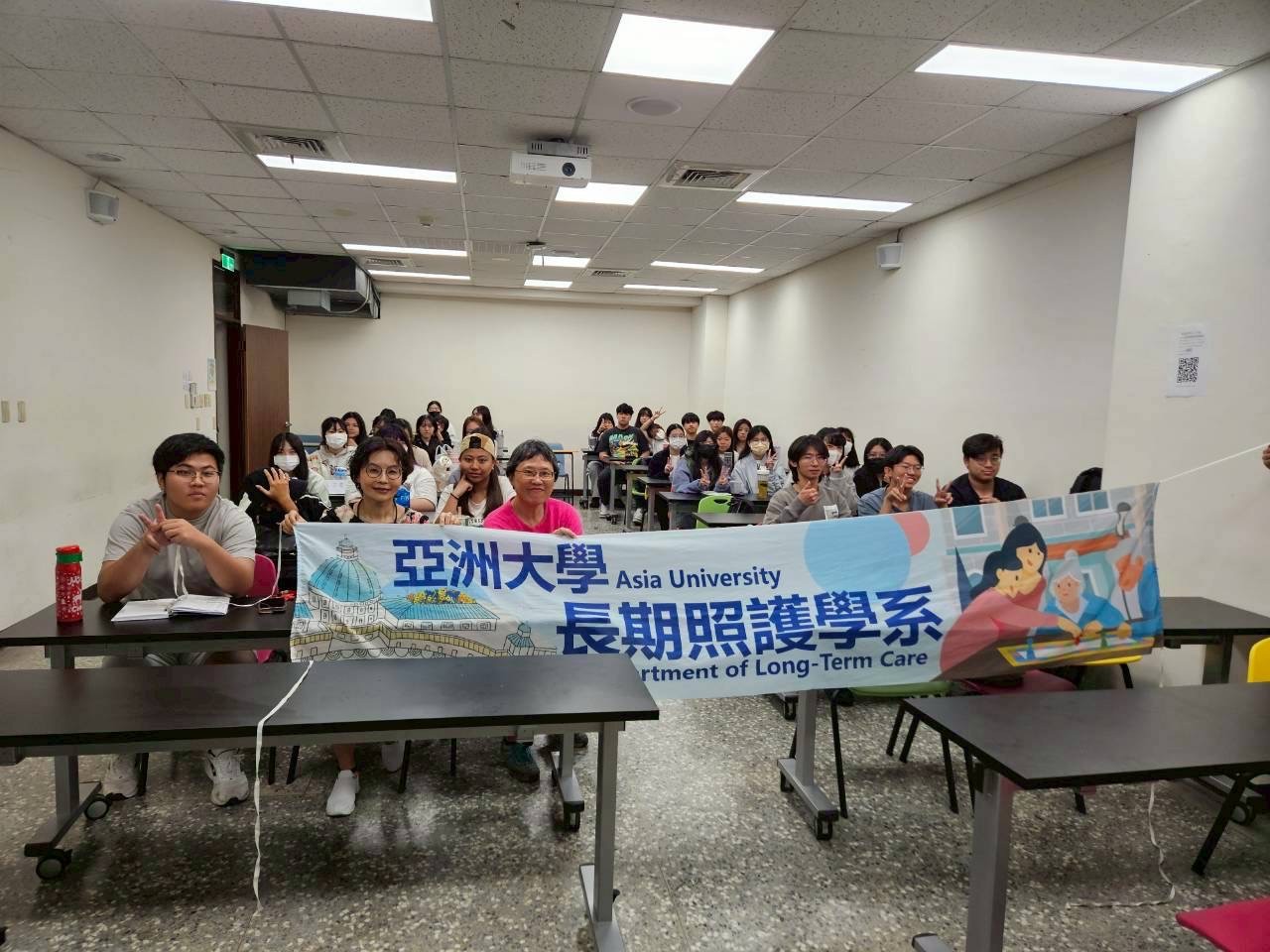
In response to Taiwan’s transition into a super-aged society, dementia care and non-pharmacological interventions have become critical issues in the field of long-term care. In the second semester of the 114 academic year, the Department of Long-Term Care at Asia University incorporated industry-expert collaborative teaching into the course Long-Term Care Policy. Assistant Professor Nai-Wen Chang from the Music Therapy Program of the Department of Music at Tunghai University was invited to deliver a special lecture titled “Dementia and Music Therapy.” The lecture introduced the application of music therapy in dementia care, non-pharmacological intervention strategies, and its practical value in long-term care services. It aimed to enhance students’ understanding of dementia care policy, interdisciplinary collaboration, and person-centered care, while strengthening their ability to connect policy frameworks with clinical practice.
The lecture content was comprehensive, beginning with the broader context of population aging and extending to the needs of older adults and individuals with dementia in terms of sensory systems, cognitive function, physical activity, and psychological well-being. It also introduced the professional foundations of music therapy, including intervention approaches, assessment procedures, and therapeutic goals. The presentation outline covered topics such as an introduction to music therapy, the needs of older adults and dementia patients, various intervention methods and levels, and the application of music therapy for elderly individuals with dementia. The speaker emphasized that music therapy is a clinical and evidence-based professional intervention that can support health promotion, emotional expression, memory enhancement, improved communication, and rehabilitation outcomes.
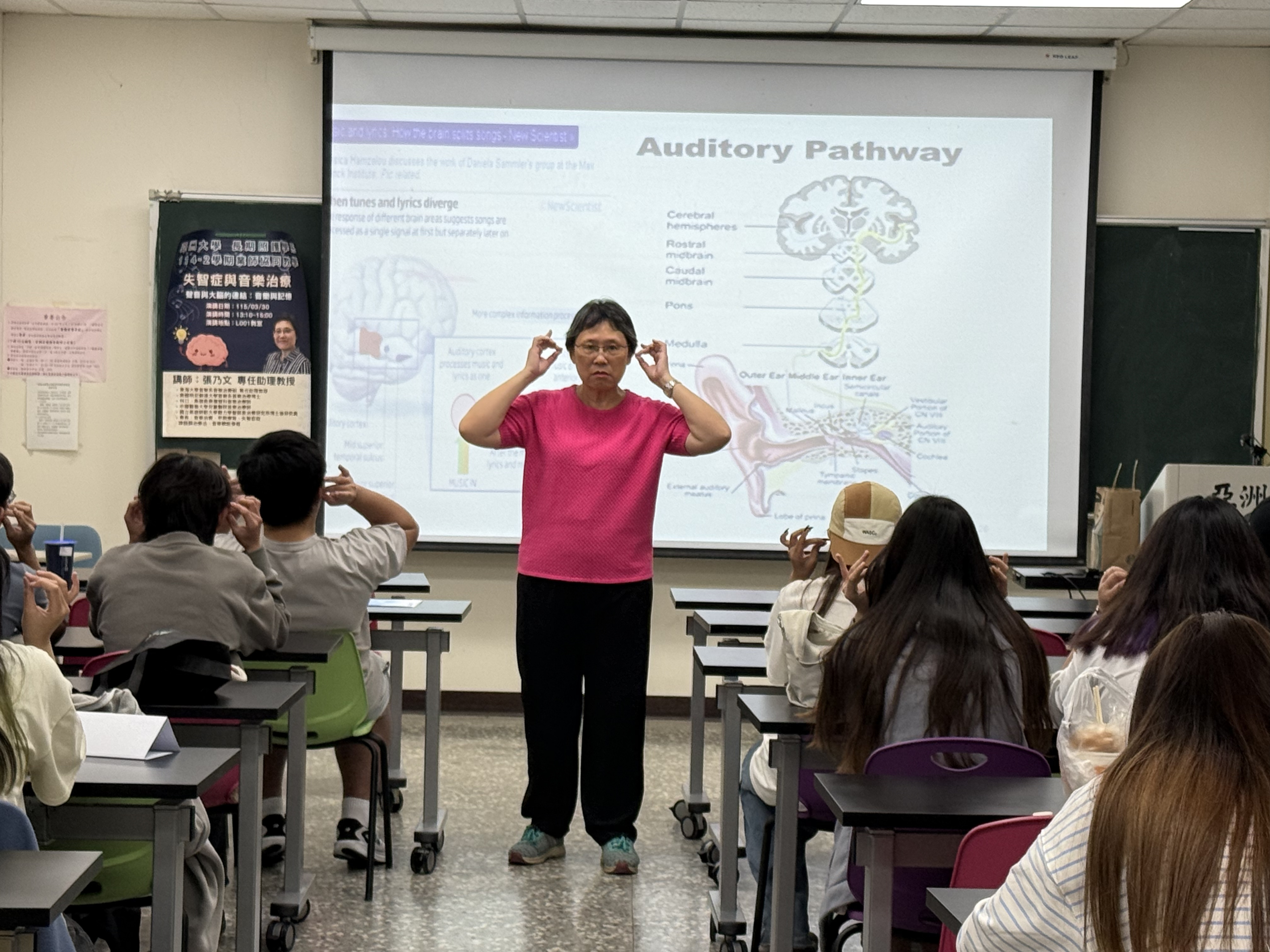
During the session, Professor Chang highlighted the close relationship between music and brain function. Through discussions on auditory pathways, cochlear function, sound frequency, and neural processing mechanisms, students were guided to understand how brain injury and neurodegeneration affect perception, memory, emotion, and social interaction in individuals with dementia. This, in turn, encouraged them to consider the practical value of music therapy in long-term care settings. Drawing on her extensive clinical and research experience, Professor Chang demonstrated that music is not merely a tool for companionship but can serve as a powerful medium for emotional expression, memory connection, and social engagement among individuals with dementia.
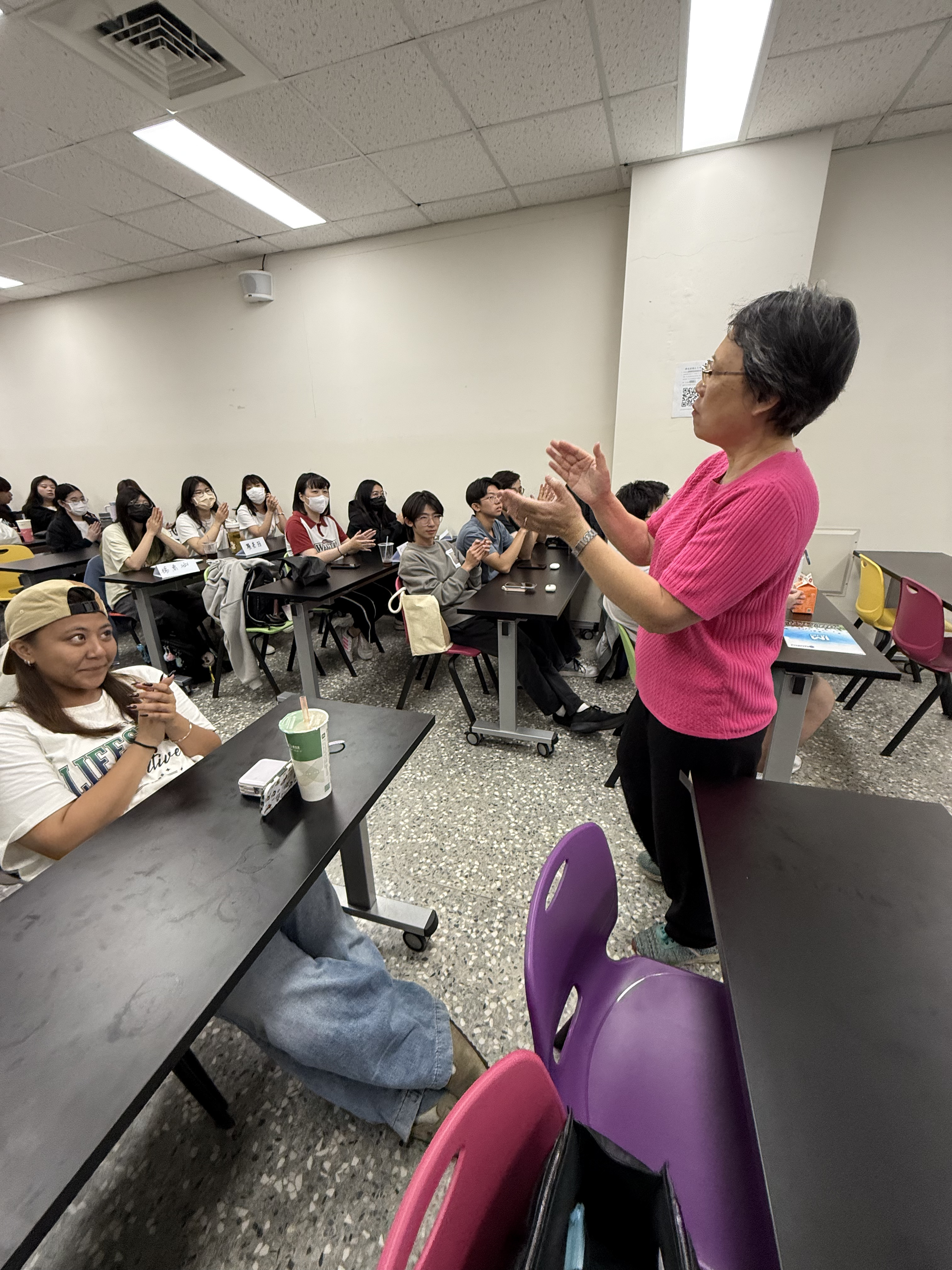
Photos from the event show that, in addition to formal lecturing, the instructor incorporated interactive teaching methods, guiding students through movement and sensory activities aligned with the course content to enhance engagement and participation. In one instance, the lecturer used slides on the “Auditory Pathway” while students followed guided movements; in another, she moved among the seating area to interact directly with students. These approaches transformed the class into an interdisciplinary dialogue and an interactive learning experience rather than a one-way transmission of knowledge.
Professor Hsiang-Lan Cheng from the Department of Long-Term Care at Asia University noted that this collaborative teaching activity not only helped students understand the practical applications of dementia care and music therapy but also cultivated their interdisciplinary competencies and self-directed learning abilities. By engaging with diverse fields such as long-term care, music therapy, neuroscience, and psychological support, students expanded their perspectives on developing secondary areas of expertise. The course also encouraged reflection on the values of life and professional responsibilities in caregiving, laying a solid foundation for their future involvement in elderly and long-term care services.
Looking ahead, the Department of Long-Term Care at Asia University will continue to integrate industry expertise and practical experience into its curriculum, promoting innovative and diversified teaching approaches. This ensures that students can connect with real-world care settings during their studies and develop into long-term care professionals equipped with humanistic compassion, sound professional judgment, and interdisciplinary integration skills.
 |
 |
 |
 |
