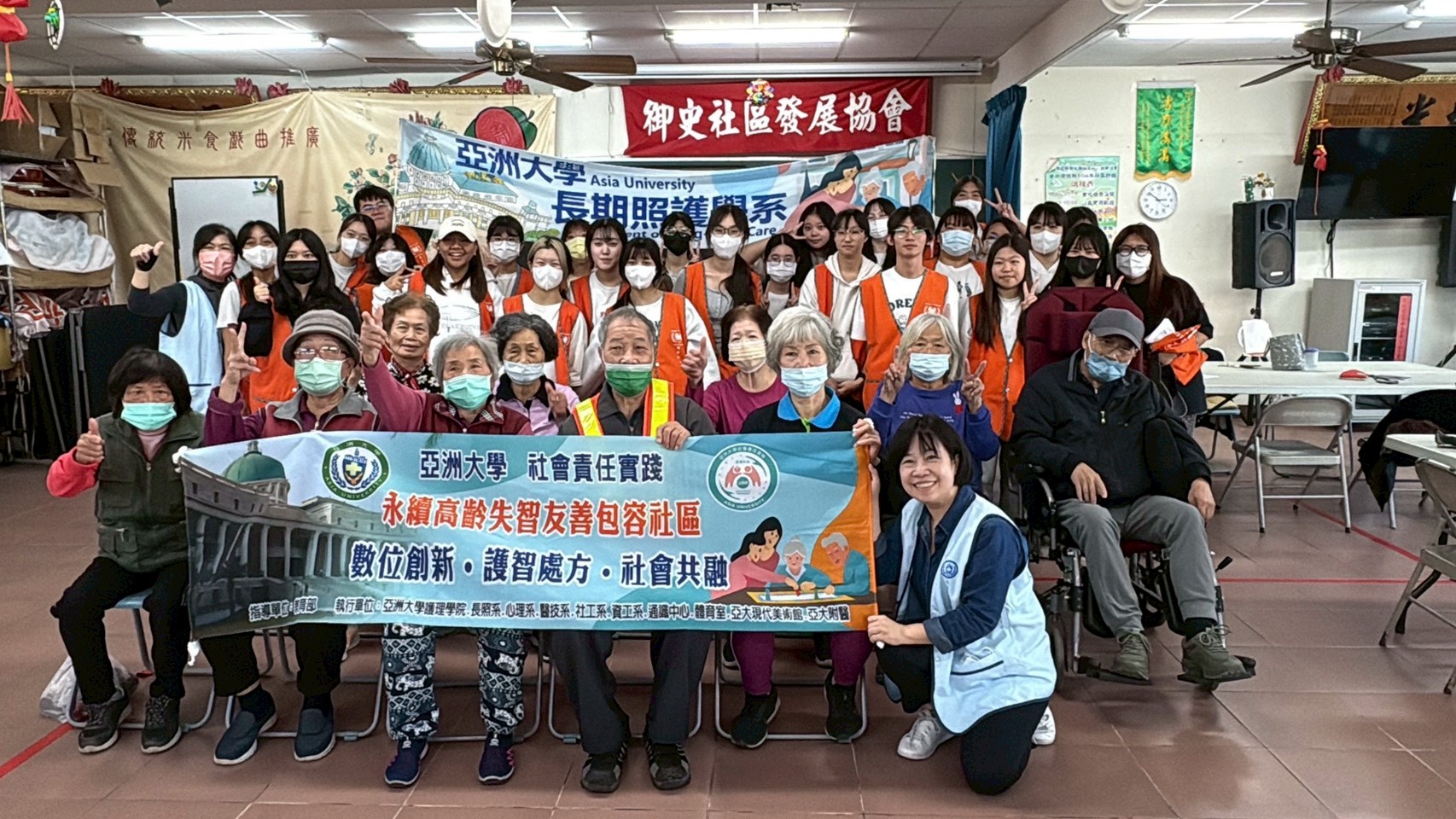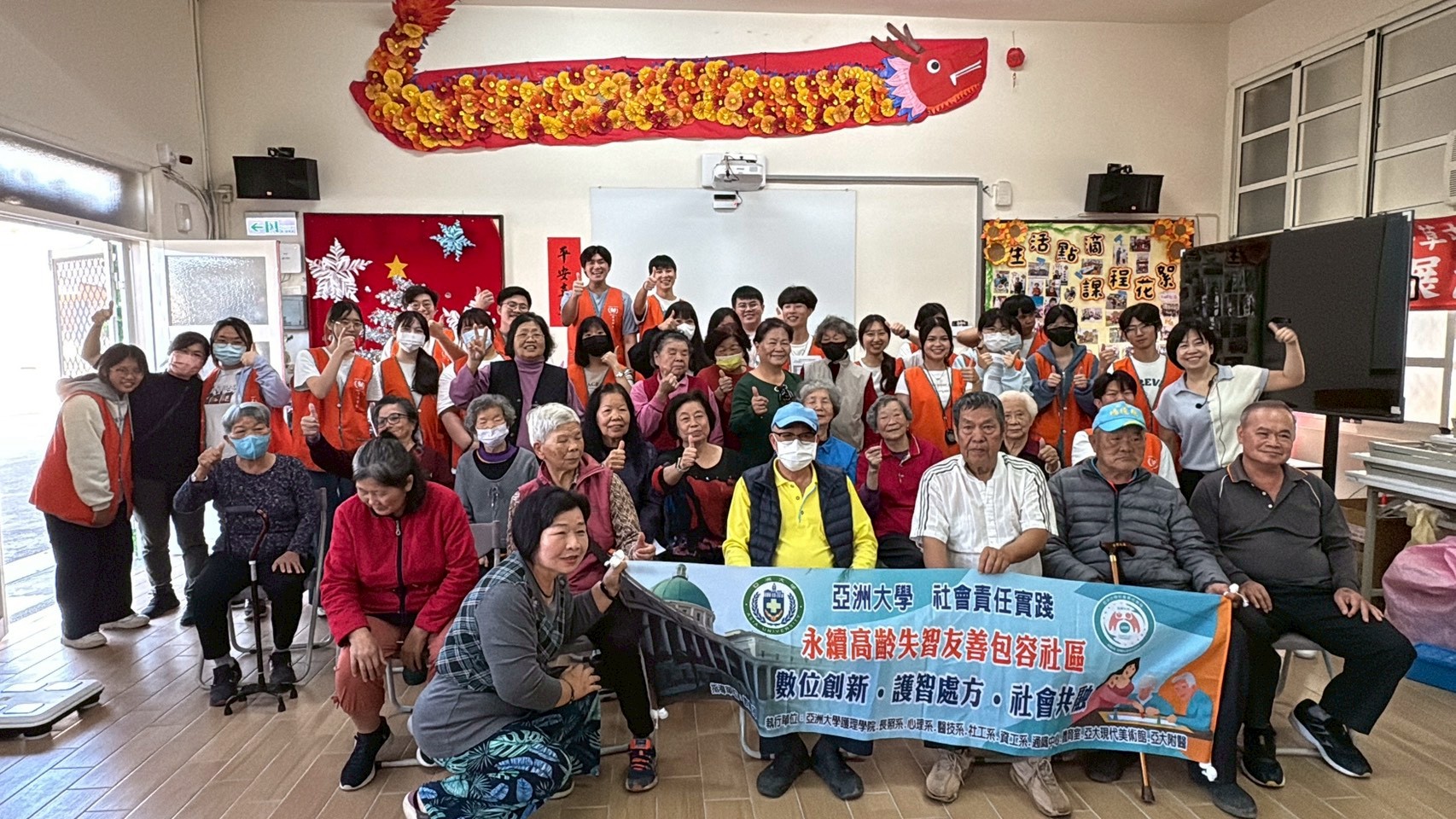

To fulfill University Social Responsibility (USR) and strengthen students’ practical competencies, the Department implemented an experiential outreach component in the first semester of Academic Year 114 through the course “Comprehensive Geriatric Health Assessment and Practice.” The course led 41 second-year students beyond the campus to Yushi and Tucheng communities in Caotun Township, Nantou County. Putting classroom learning into action, students conducted comprehensive assessments for 40 community-dwelling older adults, with an average age ranging from 65 to 95. Despite the winter cold, the students demonstrated the professionalism and enthusiasm of emerging long-term care practitioners.
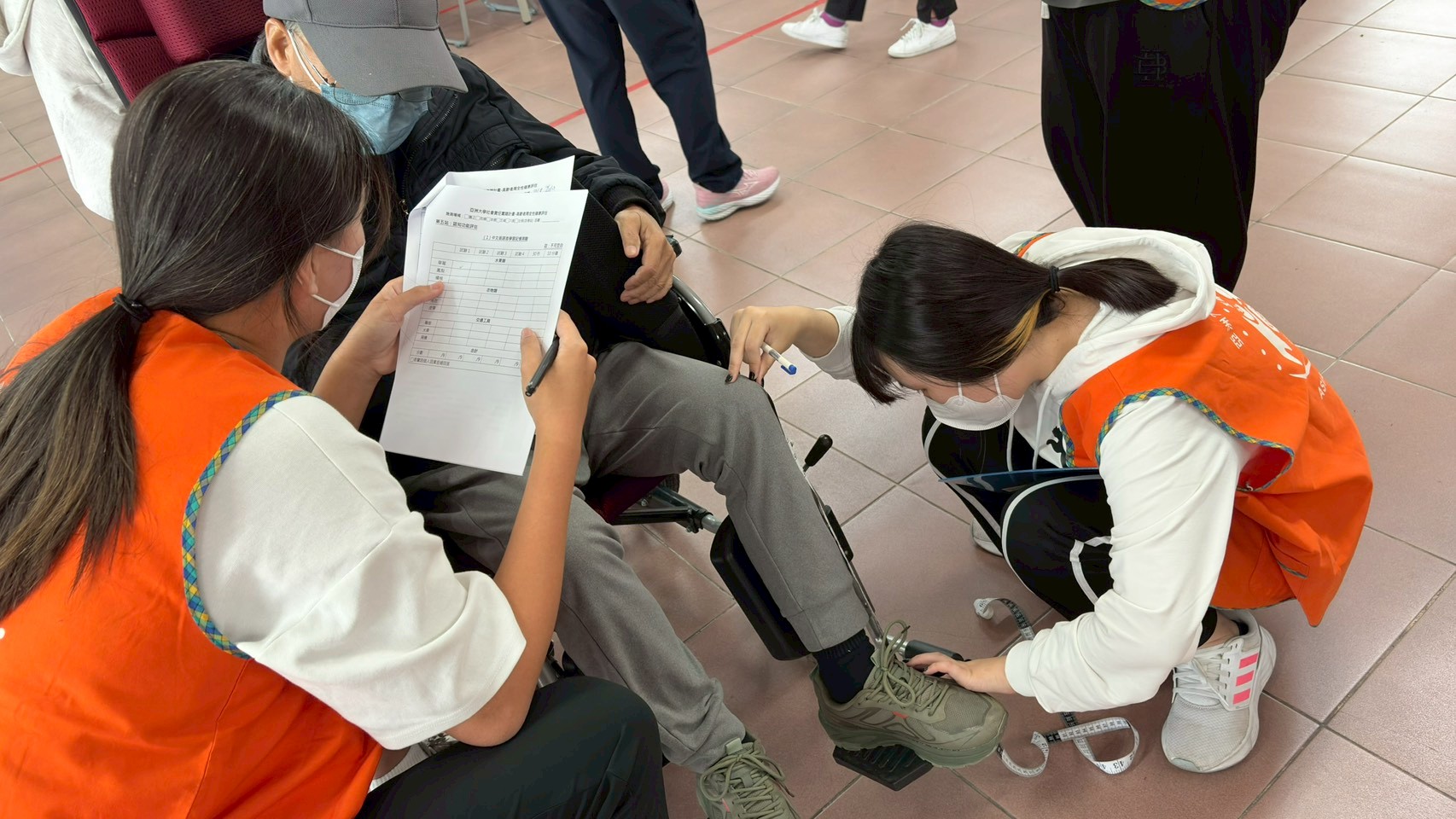
This marked the Department’s first time integrating the course with a real community setting. In the past, students primarily practiced through simulations with classmates in the classroom; this time, however, they worked with older adults who spoke fluent Taiwanese and brought rich personal life stories. Service activities were organized into six stations, covering health history, vital signs, cognitive assessment, physical fitness, body composition analysis, and bone density assessment. The most moving moments were not when students produced accurate measurements, interpreted data, or offered recommendations, but when they naturally squatted down to meet the eye level of wheelchair users or elders with stooped postures. This was more than a technical adjustment—it was a reflection of respect for older adults’ dignity. Facing many elders who were accustomed to speaking Taiwanese, students evolved from initial nervousness and hesitation to confidently guiding elders through tests in Taiwanese, and later offered thoughtful reflections and insights on community service.
One participating student, Guo, shared that when measuring the height of an elder unable to stand, the team had to adapt on site by estimating stature using knee length, which deeply reinforced the idea that “textbooks are fixed, but people are living,” and that assessment methods must be adjusted flexibly according to each elder’s condition. Another student, Gao, who was responsible for administering questionnaires, said she initially worried about her limited Taiwanese ability. However, by slowing down her speech and listening patiently, she realized that “assessment is not merely about recording numbers—it is also about companionship and support.” A simple “thank you” from an elder helped her see the value behind professional practice.
The activity concluded successfully in a warm and heartfelt atmosphere. This valuable experience has planted seeds of responsibility, empathy, and commitment to serving an aging society in the students’ hearts. Long-term care is not only a demonstration of professional skills, but also the transmission of human warmth from one person to another.