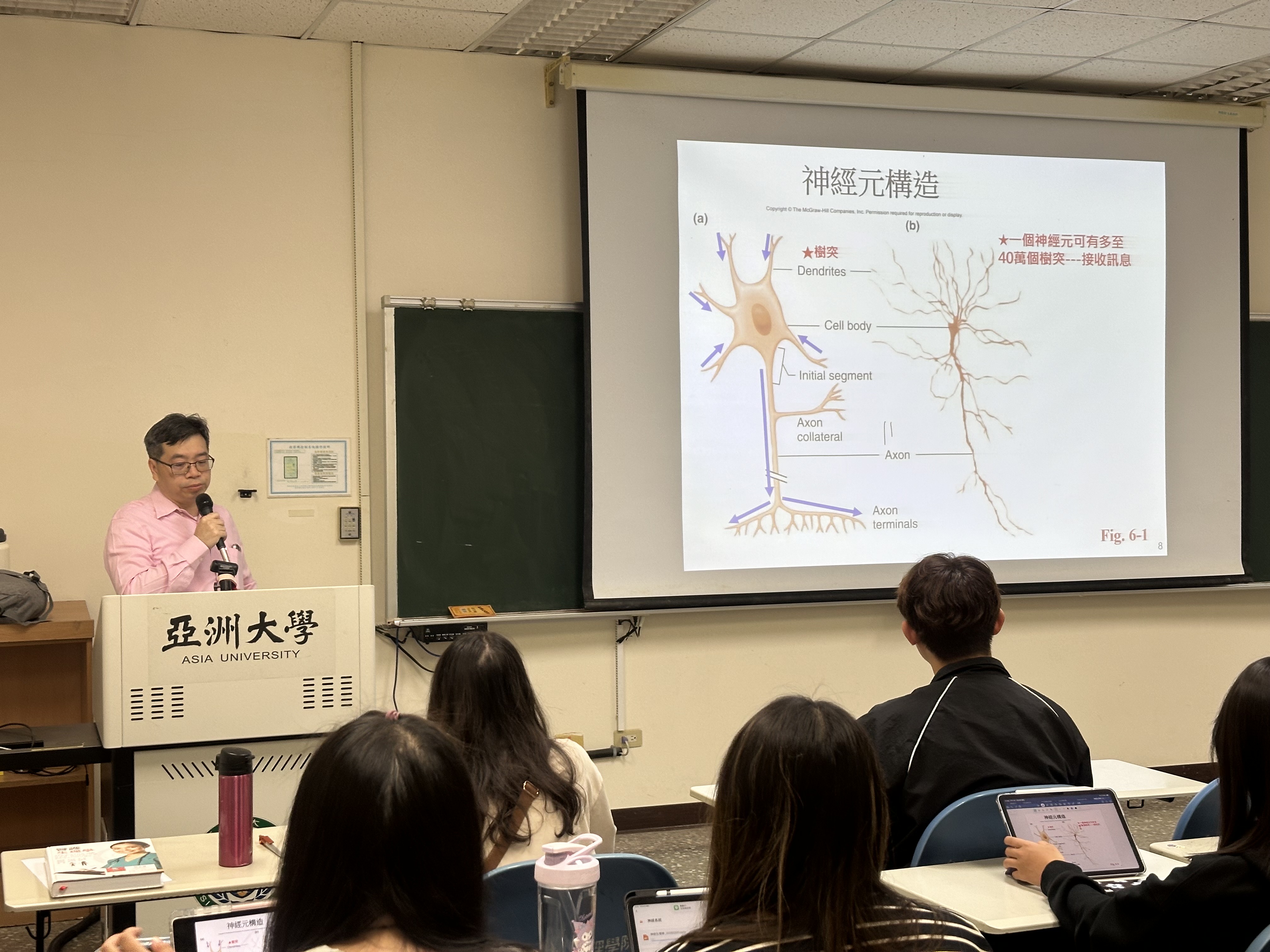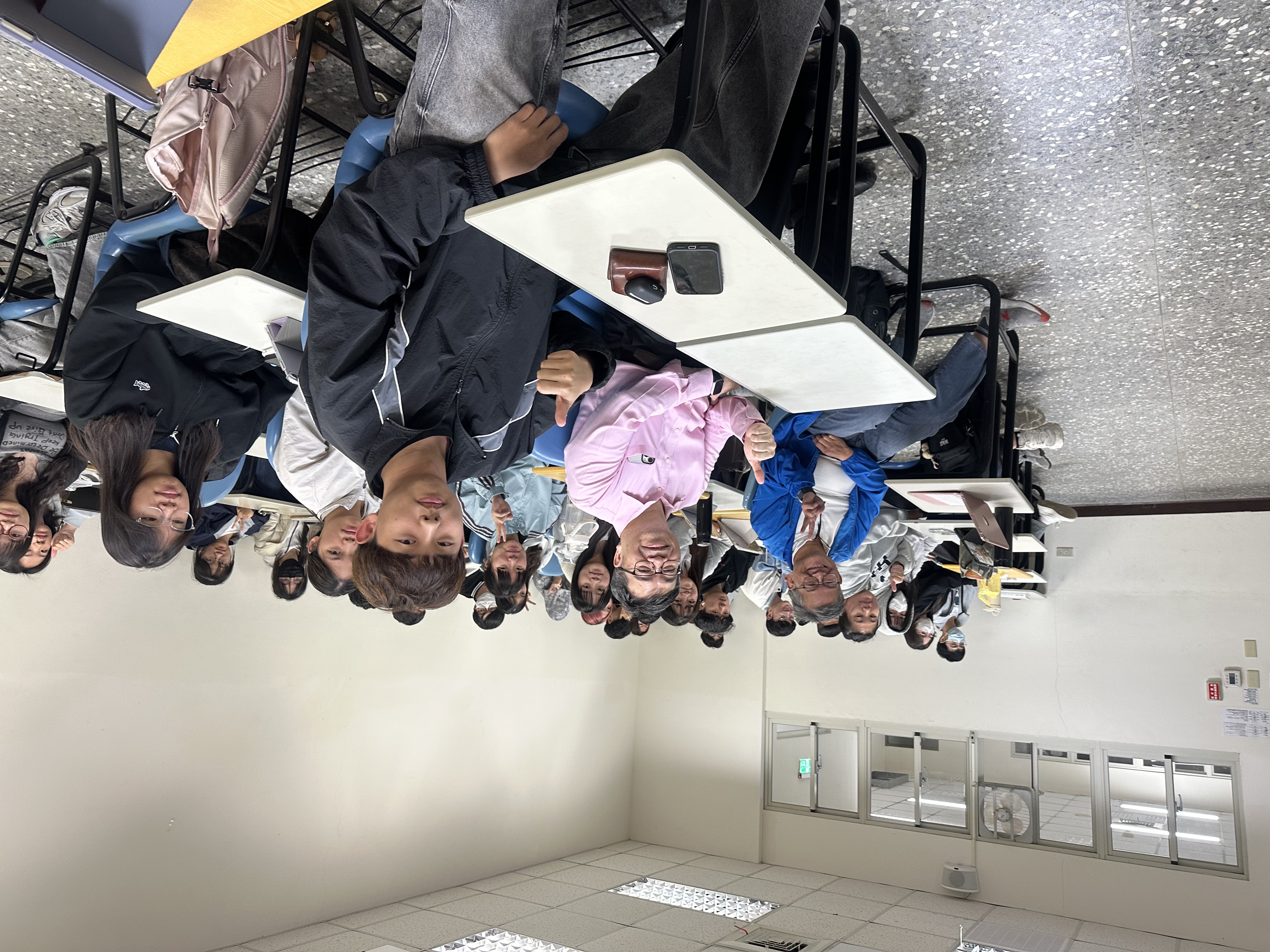

As the demand for precision care continues to rise in an aging society, the Department of Long-Term Care at Asia University invited renowned chief neurosurgeon Dr. Chien-Yu Lee (March 20, 2026) to serve as an industry mentor. He brought an engaging lecture to the “Neurophysiology” course, integrating clinical practice with academic theory. This event broke disciplinary boundaries, enabling students to understand the physiological mechanisms behind dementia, stroke, and neurological injuries from a surgical perspective, thereby strengthening their clinical judgment in future care settings.
From Clinical Experience to Classroom Insight
Drawing on decades of surgical experience, Dr. Lee transformed textbook concepts such as synaptic transmission and cortical localization into vivid clinical stories. He emphasized that neurophysiology is not only fundamental medical knowledge but also essential for long-term care:
“Only by understanding the physiological mechanisms of neural damage can caregivers truly comprehend symptoms such as emotional fluctuations, swallowing difficulties, or tremors, and provide empathetic and precise care plans.”
Interdisciplinary Dialogue: Bridging Medicine and Caregiving
The lecture focused on common neurodegenerative diseases seen in long-term care. Dr. Lee shared how subtle physiological signs can help detect early brain changes and highlighted the importance of interdisciplinary collaboration. Students were trained to communicate effectively with medical teams, reducing information gaps in patient care.
Advancing Professional Competence in Long-Term Care
Faculty members noted that inviting frontline medical experts as mentors enhances students’ professional confidence. With a solid foundation in neurophysiology, students can improve assessment accuracy and support patients with evidence-based care and rehabilitation after hospital discharge.
Students reflected: “Neurophysiology once felt abstract, but through clinical cases, we now see how relevant it is to real-world care. It has greatly boosted our confidence for future clinical practice.”
Looking Ahead: Integrating Medicine and Care
Through this initiative, the university aims to promote the integration of healthcare and long-term care. The goal is to move beyond basic assistance toward scientifically grounded, medically informed care, laying a strong foundation for cultivating professionals in the aging care industry.